
A Life Devoted to Mongolia’s Climate Future
There are lives that seem too great to be measured simply in years, and too rich to be captured by a list of achievements.
Our Advisor was one of those rare people.
He lived among us for one human lifetime, yet in Mongolia’s environmental, meteorological and climate history, he lived through and helped shape an entire era spanning nearly six decades.
Today, we bid him farewell from this sunlit world.
And yet so much of him remains.
The work he began.
The lands he helped protect.
The words he spoke on behalf of Mongolia on the world stage.
The laws he helped shape and the institutions he helped build.
The opportunities he opened for his country.
And, perhaps most importantly, the people he taught, guided and inspired.
To remember Dr. Batjargal, therefore, is not simply to look back on the life of one remarkable man.
It is to remember how Mongolia began to place the environment at the heart of public policy, how our country first found its way into the global climate negotiations, and how Mongolia came to have a voice of its own within the international community.
Decades ago, the environment was not yet discussed in Mongolia as it is today alongside development policy, the economy, energy, finance and national security. Environmental protection was often seen as a separate field, concerned mainly with forests, water, wildlife and nature conservation.
Dr. Batjargal saw much further.
Long before such thinking became mainstream, he understood that the environment was inseparable from human life, national development, the economy, society, and the destiny of generations yet to come.
In the late 1980s, as Mongolia began establishing its central government institutions for environmental protection, he was among the first generation of leaders who helped lay the institutional foundations of the sector.
He went on to lead the State Committee for Environmental Protection and later served as Minister of Environment, helping shape Mongolia’s modern environmental policy and legal framework.
Many things we take for granted today were, at the time, Mongolia’s first steps into entirely new territory.
The development and adoption of a new body of environmental legislation.
The expansion of the protected area system.
The strengthening of a national policy that regarded nature not merely as a resource to be used, but as a heritage to be protected.
Behind those changes were his labor, his conviction and his steadfast belief in what Mongolia’s future should be.
- Rio de Janeiro.
The nations of the world came together at a defining moment in history to consider, for the first time on such a scale, the future of human development and the future of the Earth as one inseparable question.
Dr. Batjargal was there, representing Mongolia at the Earth Summit.
It was the beginning of a new global environmental order the era of the United Nations Framework Convention on Climate Change, the Convention on Biological Diversity, and later the United Nations Convention to Combat Desertification.
Mongolia did not stand aside from this great global movement.
It stepped forward, expressed its own position, and entered a new era of international environmental cooperation.
Dr. Batjargal was there at the beginning of that journey.
From that time onward, Mongolia became an active participant in the world’s major environmental conventions, accepted international responsibilities, and began connecting its national policies to a rapidly changing global agenda.
It was also during that period that Mongolia put forward an extraordinarily forward looking ambition, to place 30 percent of its territory under protection.
Today, the world speaks of “30 by 30” the global ambition to conserve 30 percent of the planet’s land and oceans by 2030. Mongolia was speaking of that vision more than thirty years ago.
And Dr. Batjargal helped make that history.
One of the most moving conservation stories of the twentieth century also unfolded during those years, the return of the Takhi, the “Przewalski’s horse” to the Mongolian steppe after it had disappeared entirely from the wild in its homeland.
Only a small number had survived abroad.
To bring them home and release them once again into the open landscapes of Mongolia was an audacious dream, pursued together by the state, scientists, conservationists and international partners.
Dr. Batjargal played a leading role in advancing the government policy and institutional support that made the reintroduction of the Takhi possible.
Today, when we watch herds of Takhi running free across the hills of Hustai, we are not merely witnessing the survival of a species. We are seeing proof that a nation can choose to leave something precious for those who come after us.
Dr. Batjargal’s work and reputation soon reached far beyond Mongolia.
For a Mongolian meteorologist and environmental expert to rise to the leadership of major international institutions was, particularly in those years, an exceptional achievement.
Within the World Meteorological Organization’s Regional Association for Asia, Dr. Batjargal served first as Vice President, then as Acting President, and ultimately as President.
Through him, Mongolia’s voice reached the highest levels of one of the world’s most important scientific institutions for weather and climate.
Then, in 2000, Dr. Batjargal was elected President of the COP4 to the United Nations Convention to Combat Desertification. For a Mongolian to preside over a global convention of nations was far more than a personal achievement. It was a historic moment for Mongolia’s diplomacy, environmental science and international standing.
Later, he represented Mongolia as Ambassador Extraordinary and Plenipotentiary to Japan. Diplomacy, however, was never truly a new field for him. For Dr. Batjargal, environmental and climate action had always been a form of diplomacy in itself. He understood that problems no single country could solve alone demanded understanding between nations, decisions grounded in science, and relationships of trust built patiently over many years.
That is why, throughout his life, he became a bridge
between science and policy,
between Mongolia and the wider world,
between a developing country and international finance,
between government and the scientific community.
When climate change moved to the very center of global politics, Dr. Batjargal was once again at the forefront.
As Mongolia’s Special Envoy for Climate Change, National Focal Point to the UNFCCC, and National Focal Point to the IPCC he carried Mongolia’s voice to the global negotiating table for many years.
The adoption of the Paris Agreement in 2015 was one of the defining moments of the work to which he had devoted so much of his life.
As a lead advisor on the content and methodology of Mongolia’s INDC, then NDC, he gave his knowledge and experience to some of the most consequential questions facing the country:
What responsibility should Mongolia assume in the new global climate regime?
How should we reduce greenhouse gas emissions?
And how should our development pathway be aligned with the climate future of the world?
For him, climate change was never merely the responsibility of an environment ministry.
Energy had to change.
Agriculture had to adapt.
Land use, cities, finance, technology and industry all had to evolve.
He understood that climate change would ultimately touch every sector upon which a country’s future depends.
Today, we speak readily of green development, energy transition, climate finance and carbon markets. Dr. Batjargal had begun walking that road long before these ideas became part of Mongolia’s everyday policy language.
From the Clean Development Mechanism to the Joint Crediting Mechanism, from carbon markets to the new forms of cooperation under the Paris Agreement, he worked tirelessly to ensure that Mongolia would not be left behind.
The Joint Crediting Mechanism between Mongolia and Japan became one of the most tangible outcomes of climate cooperation between our two countries. For many years, Dr. Batjargal served as the Mongolian Co-Chair of its Joint Committee, giving to the mechanism his knowledge, his standing and decades of diplomatic experience.
By the time Mongolia and Japan marked the 10th anniversary of JCM cooperation in 2023, he had become inseparable from the history of the mechanism itself.
For long before many others, he understood that there could be no meaningful answer to climate change without transforming the way we produce and use energy.
The Global Environment Facility, the Green Climate Fund, the Adaptation Fund…
Today, we may know the names of many climate projects and programmes implemented in Mongolia. What we do not always remember are the people who spent years building the international trust behind them opening doors to climate finance, strengthening Mongolia’s ability to engage with global funds, and helping ideas become real projects on the ground.
Dr. Batjargal devoted many years of his life to opening those doors and strengthening Mongolia’s place within these global mechanisms.
He worked to bring climate finance to Mongolia, to build the capacity of national institutions, to connect Mongolia with international funds, and to translate global requirements into solutions that made sense for his own country.
Many of his international responsibilities brought no separate salary or personal reward.
And still, he continued.
The IPCC. The International Union for Conservation of Nature. The Acid Deposition Monitoring Network in East Asia. International cooperation on soil and water conservation. Renewable energy policy. Climate research.
He simply kept going. Perhaps because, to him, these things were never merely “work”. They were a duty.
A duty to his country.
A duty to the generations that would follow.
For decades, his name remained closely linked to Mongolia’s national reports to the UNFCCC, its greenhouse gas inventories, and the country’s efforts to fulfil its international climate commitments.
Positions changed. Institutions were reorganized. But he never walked away from the work.
He kept studying.
He kept advising.
He kept working with young people.
He kept speaking to the world on Mongolia’s behalf.
Right until the final day of his life.
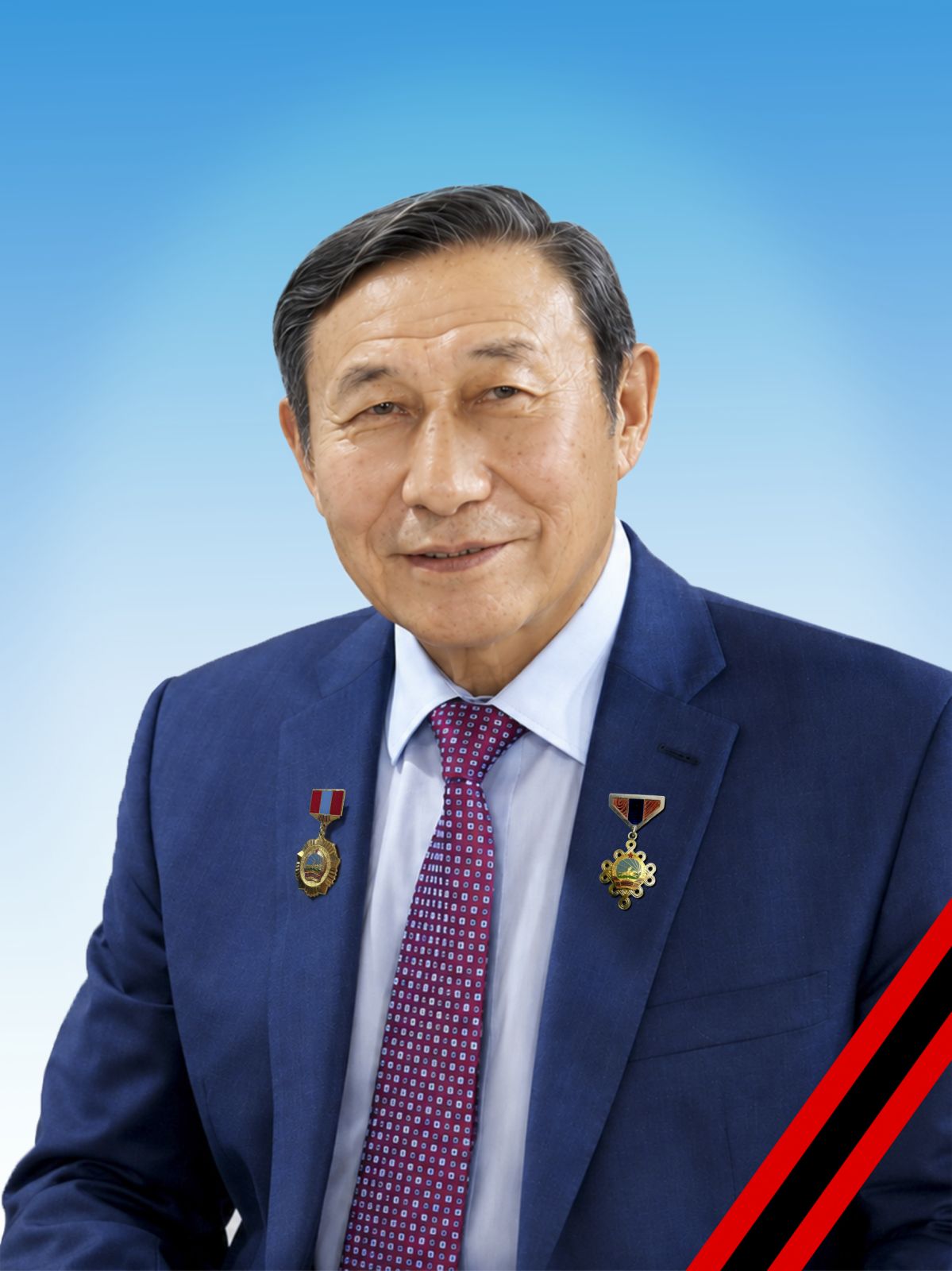
Over the years, Mongolia honored his lifelong service with some of its highest state awards and distinctions, including the Order of the Polar Star, the Order of the Red Banner of Labour, the title of Honored Environmental Worker of Mongolia, and recognition as a State Prize Laureate of Mongolia. He was also honored with the Leading Environmental Worker and Leading Energy Worker distinctions in recognition of his exceptional contributions to these sectors.
They stand as recognition of an extraordinary life of service. And yet, the truest rewards of a life are not worn on one’s chest.
His true rewards are elsewhere.
They are the herds of Takhi running across the Mongolian steppe.
The landscapes preserved under protection.
The words once spoken from the world’s great podiums in the name of Mongolia.
The laws and institutions that still endure.
The new opportunities opened for our country.
The projects and programmes that became reality.
And the colleagues, students and hundreds of younger professionals who learned from him, grew beside him, and now carry his work forward.
His greatest honor is the legacy he leaves behind. It is the way of this world that every human life must one day come to an end.
Yet there are people whose work becomes clearer, larger and more meaningful only after they have gone.
Today, Mongolia has a Law on Climate Change.
We speak of implementing the Paris Agreement, of carbon markets, green development, energy transition and climate finance.
We have a place at the global negotiating table.
We have national reports, greenhouse gas inventories, systems for working with international climate funds, bilateral and multilateral mechanisms, and a new generation of trained professionals.
None of this appeared overnight.
Someone had to build the road.
And among those who built it, Dr. Batjargal was surely one of those who travelled the longest distance.
He devoted nearly six decades of his conscious life to Mongolia’s environment, weather and climate, climate change, green development, energy transition and international cooperation.
For one human life, it is an astonishingly long story.
For one nation, it is a legacy that must never be forgotten.
We often look at the things around us today and imagine that they have simply always been there.
But when we trace them back to their beginnings, we discover that someone first believed in them.
Someone saw them before others did.
Someone knocked on the first door.
Someone kept walking, year after year, without giving up.
In the history of Mongolia’s environment, meteorology and climate change, Dr. Batjargal was one of those people.
We can still picture him so vividly backpack on his shoulders, walking with that familiar slight stoop beneath Mongolia’s endless blue sky.
Yet the gaze of that quiet man had long since reached far beyond it, toward the climate future of the whole world.
A journey that began with protecting Mongolia’s nature had grown into a lifelong mission in service of humanity’s shared future.
Today, our Advisor has left us to watch over us from the heavens perhaps now through “GOSAT” but,
whenever the Takhi thunder across Hustai in the wind,
whenever a Mongolian delegate raises our country’s voice in the halls of global climate negotiations,
whenever a young researcher sits beneath the blue sky and studies the climate future of our homeland,
whenever a new green project takes root in Mongolian soil, his work will continue.
His footprints will remain woven into the life of this country.
To be born and to depart is the way of this world.
But the mark left by a life lived with purpose does not fade with time.
The cherished memory of our Advisor, Dr. Batjargal ZAMBA, will live on beneath Mongolia’s eternal blue sky, across its boundless steppe, and in every endeavor he began, helped build, and entrusted to those of us who remain.
Dr. Batjargal was our Advisor, teacher, mentor, guide and steadfast source of support.
Above all, he was a man of extraordinary humility and warmth.
A gentle human being.
A remarkable Mongolian.
And a life devoted to Mongolia’s climate future.
On behalf of the Joint Committee of the Joint Crediting Mechanism
between Mongolia and Japan
Your mentee and colleague,
Ogi